Relearning How to Read: Norwegian Wood at the Terminal
Everyone has that one book they were supposed to read years ago but didn’t, because they weren’t yet the person who could understand it. Norwegian Wood is that book for me.

Preface
Everyone has that one book they were supposed to read years ago but didn’t, because they weren’t yet the person who could understand it. Norwegian Wood is that book for me.
Haruki Murakami published it in 1987, and it made him a literary phenomenon almost overnight. It’s a quiet, melancholy novel about a young man named Toru Watanabe, who looks back on his university years in 1960s Tokyo – years marked by love, loss, and the uneasy transition into adulthood. The story begins mid-flight, as a Beatles song stirs a memory that refuses to stay buried. From there, Toru drifts through friendships, funerals, and fragile romances, trying to learn how to live in a world where everything dear eventually disappears.
Unlike Murakami’s later, dreamlike novels filled with talking cats and alternate worlds, Norwegian Wood is grounded and intimate. Its surrealism isn’t in the plot but in the feeling: the strange, suspended quality of being young and lonely and half in love with your own sadness. The book became a cultural touchstone in Japan, a kind of collective elegy for youth, though Murakami himself fled the country soon after its publication, unsettled by the intensity of the attention.
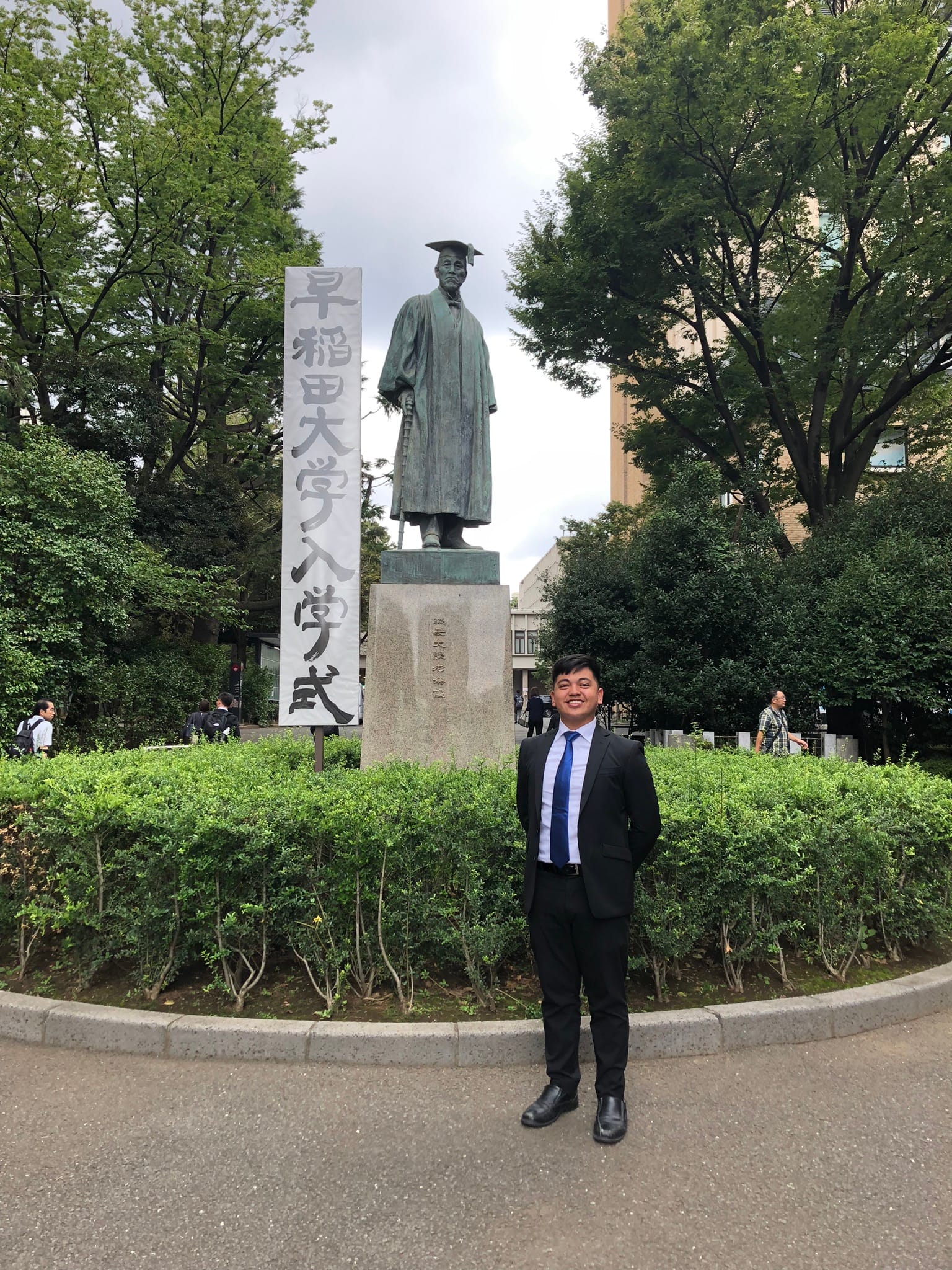
I had known all this before I opened it, which is probably why I avoided it. When I was twenty, living in Tokyo and studying at Waseda University, the same campus Murakami once walked, I thought I understood what the book was about. I didn’t. You can’t, not until life has taught you a few things about distance, regret, and how memory changes shape when you’re no longer trying to escape it.
The Return to Reading
I never really stopped reading. I just stopped reading for myself. These days it’s all professional education or international-relations theory, books with citations, not feelings. Useful things. They make me sharper, maybe even wiser, but rarely softer.
It’s a strange loss, realizing you still read constantly but can’t remember the last time a book actually moved you. Somewhere along the way, I started treating reading like exercise: necessary, efficient, measurable.
Back in high school it was different. I went to Stuyvesant High School in lower Manhattan, one of those specialized public schools New Yorkers treat like a legend. Admission comes from a single exam, and once you’re in, it feels like living inside a science fair that never ends. The school is known for math and science prodigies, debate champions, and teenagers already coding startups between classes. What most people miss is that its English department was quietly brilliant.
Those classrooms were small sanctuaries tucked inside a pressure cooker. My AP English teachers were overworked idealists who believed literature could still save you if you let it. They pushed us to notice things – to stop, to feel, to name why something beautiful hurt a little. My classmates were brilliant in that restless, kinetic way only Stuy kids could be, arguing about Salinger between physics labs and writing essays that read like confessions. I wasn’t the smartest; I was just the most sentimental. I liked how words could make ordinary things ache.
That version of me got buried under deadlines and degrees. But a few months ago, standing in an airport terminal with hours to kill and nothing urgent left to read, I felt a flicker of him again. I wanted something unproductive, something human. I scrolled through my Kindle, skipping past white papers and policy PDFs, until I saw Norwegian Wood.
I’d known of it for years, mostly because of the coincidence: Haruki Murakami wrote it from his memories at Waseda University, the same campus where I once wandered between classes, half-lost and half-enchanted. His protagonist studies at a barely disguised version of it, drifting through the same alleys behind Takadanobaba and the same lecture halls that still smell faintly of chalk and rain. I never read it back then; it felt too close. But sitting in that terminal years later, about to fly home, it suddenly felt like the right kind of distance – a book about youth, memory, and loss written by someone who had already outgrown them.
I downloaded it almost out of nostalgia: for him, for Waseda, and maybe for myself.
The Flight and the First Pages
The terminal was almost empty by the time we began boarding. Most stores were locked behind metal grates, lights dimmed to save power. The smell of burnt coffee lingered from a café that had closed an hour earlier. It was just before midnight – the kind of hour that feels like an ellipsis.
I settled into a middle seat, hemmed in by sleeping strangers and the stale chill of recirculated air. My phone was nearly dead. I pulled out my Kindle and opened Norwegian Wood. I’d meant to read it for years and hadn’t, mostly because I knew too much about where it came from: Murakami’s memories of Waseda. It was the same campus where I’d spent a year wandering lecture halls and eating abura soba with my clubmates in the ballroom dance club. Back then it felt too close; reading it now felt like a safe kind of homesickness.
Murakami begins on a plane too: a man hearing “Norwegian Wood” and falling back into the past. It’s a simple premise but a perfect one. His narrator isn’t reminiscing; he’s orbiting. Memory, for Murakami, isn’t a window. It’s a loop. The more Toru Watanabe tries to move forward, the more the same melody repeats: love, loss, distance, return. I felt it physically on that east-bound flight, moving through time zones and toward morning.
Murakami’s sadness has always struck me as clean, almost sterile. He writes about loneliness like a cartographer mapping its borders rather than escaping it. Toru’s tragedy isn’t that he loses people; it’s that he learns how permanent loss becomes once it stops hurting. “Death exists,” he says, “not as the opposite of life but as a part of it.” That line stayed with me through the night, the plane engine a low mechanical heartbeat. It’s not about death; it’s about acceptance, recognizing that endings are what give everything else shape.
Hours later we landed in Atlanta. The airport was all light and noise, a sudden intrusion of the living world: baristas shouting orders, businessmen speed-walking, CNN blaring from every gate. I sat there during my layover, disoriented by the contrast, feeling like I’d surfaced too soon.
On the connecting flight north, dawn spread across the wing. Thin pink light brushing the horizon. By the time we reached New York, the city was already awake. I closed the Kindle as we descended through low clouds and thought about Toru, still wandering through his memories long after the book ends.
I didn’t feel enlightened or nostalgic, just quietly rearranged. Norwegian Wood didn’t tell me anything I didn’t already know; it reminded me that knowing isn’t the same as understanding. Sometimes it takes 800 miles, two flights, and a borrowed sadness to remember what feeling honest feels like.
Memory, Youth, and Distance
I meant to sleep on the flight, but Norwegian Wood wouldn’t let me. Somewhere over the Midwest, the cabin went dark except for a scatter of reading lights. I kept mine on. Murakami’s sentences have that narcotic stillness that keeps you turning pages even when your eyes start to sting. By the time the captain announced our descent into Newark, I had finished the final chapter. Dawn leaked through the windows, pink against the wing. I felt hollowed out in the best way—quiet, a little raw, but alert.
What lingered wasn’t the plot so much as the way Murakami arranges silence. Toru moves through loss like someone walking underwater. Every sound distorted, every gesture slow. He spends most of the book doing what we usually avoid: sitting inside grief until it becomes ordinary. That stillness felt painfully familiar. I’d done the same thing after my own small collapses. Mistaking endurance for healing, assuming time would do the work for me.
The insight came from how Murakami contrasts Toru’s quiet with Nagazawa’s brilliance and Naoko’s fragility. Nagazawa lives like a man allergic to sincerity, collecting lovers to avoid intimacy. Naoko is the opposite – so attuned to feeling that it consumes her. Toru floats between them, searching for balance between detachment and vulnerability. He fails, and that failure is the point. When Midori tells him, “You’re a really sweet person, but you’re always thinking too much about yourself,” it’s the novel’s moral diagnosis in a single line: self-awareness without courage. Reading it at 35,000 feet, I recognized myself in that quiet indictment. Reflection without action, introspection turned safe.
Murakami’s great cruelty is his honesty about love: it doesn’t save anyone. When Toru finally reaches for Midori at the end, he does so from a void the book never pretends he’s escaped. Naoko is gone, Kizuki is gone, Reiko has disappeared into memory. The past remains intact, untouchable. “I’ll never see you again,” Reiko says, “but that’s all right. People can survive even their memories.” It’s not comfort. It’s resignation dressed as wisdom. Yet in that line I found the novel’s quiet mercy: survival is enough. We don’t transcend loss; we metabolize it.
By the time we landed, the cabin lights snapped on and everyone began their mechanical rituals; seatbacks, headphones, the shuffle of impatience. I sat there a moment longer, blinking against the sudden light, trying to reconcile the stillness of the book with the rush of arrival. Outside, the tarmac was slick from early rain, reflecting the glow of orange taxi lights. I hadn’t slept a minute, but I felt oddly awake, as if Murakami’s melancholy had burned away something sluggish in me.
Norwegian Wood doesn’t ask to be admired; it asks to be inhabited. Finishing it on a redeye felt fitting. The book and the flight shared the same rhythm—forward motion in the dark, no promise of destination, only the understanding that morning would come whether you wanted it to or not.
Landing
The jet taxied for too long. Everyone stood before the seat-belt sign went off, half-asleep but desperate to move. I stayed seated, still holding the Kindle, unsure what to do with the quiet Norwegian Wood had left behind. Newark was washed out through the window. Wet pavement, pale morning, a skyline blurred by rain.
Murakami ends with Toru standing in a crowd, lost between what he feels and where he is. For years I’d thought of that moment as tragic, a man swallowed by memory. This time I read it differently. After spending the whole novel walking through the fog of his past, Toru suddenly wakes up inside his present. He is groggy, disoriented, but finally conscious. He doesn’t know where he is because he’s no longer inside a memory. He’s back in the world, blinking at the light. That, I realized, is a kind of happiness.
As the cabin emptied, I thought about how the book never grants its characters neat redemption. It only gives them awareness, and that has to be enough. Naoko never reaches it. Midori fights for it. Toru stumbles into it by accident – an imperfect grace, but grace all the same.
Walking through the terminal, I felt that same tentative alertness, as if I’d surfaced from a long dream. The airport noise – espresso machines hissing, luggage wheels echoing, people greeting one another too loudly – felt newly precise, almost tender. Murakami’s world had ended in fog; mine began again in fluorescent light.
Reading Norwegian Wood didn’t make me long for youth. It made me grateful for consciousness – the slow, reluctant kind that arrives after sleepless nights, when you realize the past isn’t pulling you backward anymore.
You’re just tired, awake, and moving forward.
Author’s Note
I’ve been finding my way back to the reading for joy. Some of these books are old ones I missed when I was younger; others are new but feel like they’ve been waiting for me.
Next, I’ll be writing about The Killer Angels by Michael Shaara which is another book I approached almost by accident, and one that ended up saying something quiet but enduring about courage, loss, and the strange intimacy of history.